

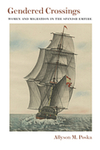
Gendered Crossings: Women and Migration in the Spanish Empire
Files
Description
Patagonia was never hospitable to European settlement, but between 1778 and 1784 the Spanish Crown sent more than 1,900 peasants there in a disastrous attempt to colonize the remote South American coast. The narrative begins in the Old World, tracing the colonists' journey to the port at La Coruña. There they received food, housing, and medical care as they waited for ships to take them across the Atlantic to Montevideo, a journey that included horrific storms and at leas one encounter with English corsairs. A few peasants settled temporarily at the Patagonian outposts of Fuerte del Carmen and Floridablanca. But before the last ships reached the Americas, the Crown abandoned the project owing to financial problems, disease, harsh weather, and the prospect of mutiny. The peasant colonists were resettled in new towns outside of Buenos Aires and Montevideo, where they raised families, bought slaves, and gradually became integrated into colonial society. At every stage, their gendered experiences were informed by their contacts with other settlers, Indians, and Africans, as well as conservative Bourbon social policies and the complications of frontier life.
ISBN
9780826356437
Publication Date
2016
Publisher
University of New Mexico Press
City
Albuquerque
Keywords
Women immigrants, Latin America, Social conditions, Economic conditions
Disciplines
Cultural History | Latin American History | Social History | Women's History
Recommended Citation
Poska, Allyson M., "Gendered Crossings: Women and Migration in the Spanish Empire" (2016). Books and Chapters. 21.
https://scholar.umw.edu/hist_amst_books/21