


-
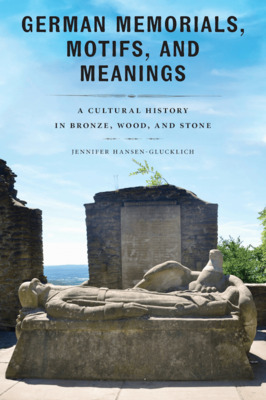
German Memorials, Motifs, and Meanings: A Cultural History in Bronze, Wood, and Stone
Jennifer Hansen-Glucklich
German Memorials, Motifs, and Meanings offers a unique cultural history of German memorialization. The book focuses not on a single, isolated era, but rather on enduring memorial motifs—enchanted stones, magical trees, raised fists, stone circles, and similar evocative symbols derived from myth, folklore, Christianity, national iconography, and post-Holocaust imagery. It thus takes a long-duration perspective, sweeping across the centuries to explore abiding themes such as death, rebirth, and redemption; violence and reconciliation; and sacrifice, identity, and community. Along with a consideration of the historical and social circumstances of each memorial and its motifs, author Jennifer Hansen-Glucklich answers the questions of why and how these cultural markers survive the passage of time and how they endure amidst cultural, social, and political upheavals that include the rise and fall of empires, catastrophes of war and occupation, and genesis of new national identities. She uniquely focuses on lesser-known or unknown memorials found either in smaller German cities or tucked away in villages and hamlets.
-
Ch. 9: Translating Genre and Gender for Madrid Audiences: The Case of María Rosa de Gálvez
Elizabeth Franklin Lewis
This chapter appears in the book, Gender and Cultural Mediation in the Long Eighteenth Century: Women across Borders. Edited by Monica Bolufer, Laura Guinot-Ferri, and Carolina Blutrach.
Chapter abstract: This essay highlights the importance of translation for eighteenth-century women writers, giving special focus to the life and work of María Rosa Gálvez (1768–1806), the most successful Spanish woman writer of her day and a member of a family with important positions in the Bourbon administration in both Spain and colonial America. We will consider Gálvez’s comments on translation, theatre, and lyric, as well as the international texts that she adapted, translated, or imitated to understand better her attempts to make a place for herself in literary history. A focus on two translations—Catalina o la bella labradora (1801) and the opera Bion (1804)—along with one original sentimental drama—El egoísta (1804) will reveal the importance of genre and gender in the aesthetic and thematic choices that Gálvez made in her translations, adaptations, and original texts. Ultimately, we will go beyond the dichotomy of previous approaches to Gálvez’s work, seeing her translated and original work as separate and unequal endeavours, to see how her choices of genre and emphasis on gender run throughout her career.
-

Ch. 5: Discounting Dreams: Depravity, Consumption, and Fashion in the Nineteenth Century Department Store in France
Leonard R. Koos
This chapter appears in the book, In Fashion: Culture, Commerce, Craft, and Identity. Edited by Jacque Lynn Foltyn and Laura Petican.
Chapter abstract: In the mid-nineteenth century, as industrial production transformed the French economy during the Second Empire, a new retail model in the form of the department store emerged which revolutionised the ways by which clothes were designed, produced, and consumed. This chapter proposes to examine the early history of the world’s first department store, Paris’ Au Bon Marché, as it relates to the evolution of the modern fashion system during this period. My consideration will begin by detailing the primary precursor to the department store in France, the magasin de nouveautés (roughly translated as a dry goods store) which had begun to offer for sale multiple types and large amounts of merchandise in the same location, thus leading to a modern notion of shopping as well as the encouragement of aberrant consumer activity like shoplifting. Next, my chapter will consider the founding and early history of Aristide Boucicaut’s Au Bon Marché, from its establishment in 1852 through its greatest successes in the 1870s. With Au Bon Marché, which directly catered to a middle-class clientele in a newly reconstructed and modernized Paris, Boucicaut developed a new business model that revolutionized the experience of shopping. I will analyze some of the new and innovative business practices that developed in this department store like the free access of the shopper to merchandise, original advertising strategies targeting multiple demographics, the progressive introduction of ready-to-wear clothes, the rapid, often seasonal turnover of stock, and special promotional events (for example, the store’s famous white sales in the 1870s). In these examples, my chapter will demonstrate how this new approach to retailing, in turn, shaped the structure of the production and consumption of modern fashion, instituting a new aesthetics of display that facilitated its mass consumption.
-
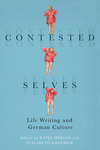
Ch. 8: Voices from an “Extinct Species”: Narrative Responses to Trauma in German Jewish Memoirs
Jennifer Hansen-Glucklich
This chapter appears in the book, Contested Selves: Life Writing and German Culture. Edited by Katja Herges and Elisabeth Krimmer.
Chapter abstract: THE GERMAN JEWISH WOMEN who spent many of their later years writing memoirs about their lives during and after the rise and fall of Nazi Germany seldom expected to publish their work. They wrote for their children and grandchildren and for the generations to come, but mostly they wrote for themselves, in order to work through their traumatic pasts, to make sense of their choices, and to confront their losses and regrets from a temporal and geographical distance. Hundreds of these personal statements now lie in archives, silent like their authors. This essay seeks to amplify the voices of these women because they tell an important story both individually and collectively. Amplification implies, primarily, a psychological, literary, and theoretical understanding. I choose a descriptive stance rather than a tribute to the memoirists’ loss. The memoirists were witnesses to personal and collective trauma in 1930s and 1940s Germany; as literature, however, their memoirs demonstrate the ways that life writing acts as a response to trauma: that is, as a reconstitution of the self and as a form of pursuing and attaining moral meaning and cultural purpose.
-
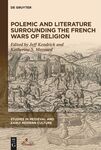
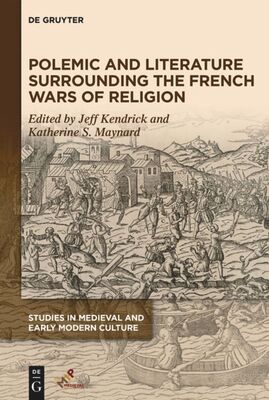
Ch. 5: A Martial Muse: Words of War in the Quest for French Domination of Literature
Brooke Di Lauro
This chapter appears in the book, Polemic and Literature Surrounding the French Wars of Religion. Edited by Jeff Kendrick and Katherine S. Maynard.
Chapter abstract: For François Charbonnier, it is the combative nature of the poetry produced during the Wars of Religion that makes it uniquely French:“les qualités pure-ment françaises de notre poésie classique dérivent, pour une bonne part, desœuvres de combat.” Violence and war related themes are not, however, exclusive to the later stages of French Renaissance poetry. As early as 1549, Joachim Du Bellay’s Deffence et illustration de la langue françoys represents the struggle for domination among a number of national literatures, both classical and con-temporary, as a war like any other. In the Deffence,recognized today as the manifesto for Renaissance literature in France, Du Bellay fires the opening volley in a cultural and linguistic war on the dominance of Latin as the lingua franca of learned discourse in favor of the vernacular, in particular French, which was already establishing itself as the language of bureaucracy. DuBellay’s extensive use of war-related vocabulary mirrors that of the oft-forgotten genre of the bella grammaticalia which had prospered across Europea generation or two earlier. Indeed, Du Bellay’s push for the dominance and glorification of the French vernacular intensifies those earlier representations of linguistic wars for the acceptance of a vernacular erudition and the creation of national literatures.
-
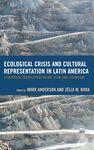
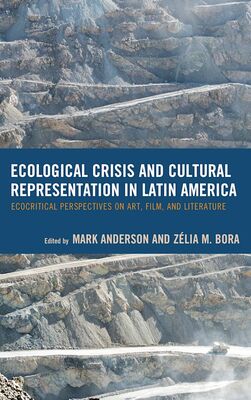
Ch. 4: The Brevity of the Planet: Environmental Loss in Recent Poetry by Contemporary Amazonian Writers
Jeremy Larochelle
This chapter appears in the book, Ecological Crisis and Cultural Representation in Latin America: Ecocritical Perspectives on Art, Film, and Literature. Edited by Mark Anderson and Zelia M. Bora.
Chapter abstract: For native Amazonians, the clear-cutting of trees and the destruction of the local environment is made all the more devastating because they constitute not only a loss of habitat and biodiversity, but also the loss of the spirits and protectors who inhabit those trees and animals. This uniquely Amazonian worldview is also present in recent poetry from throughout the Amazon region and serves to raise environmental awareness in readers and engage them in an animistic view of the world. Their poetic work directly confronts stereotypes about the region, making it essential reading in courses on literature and environment. In the Amazonian worldview and its varied representations, the more-than-human world has agency and is inhabited by both protective and defensive spirits. The physical and spirit worlds are experienced as inseparable. In his introduction to (El ojo verde: Cosmovisiones amazónicas The ), anthropologist Fernando Santos Granero articulates the fluidity between multiple spheres of reality present in Green Eye: Amazonian Worldviews this worldview: “instead of establishing rigid boundaries between nature and society, human and animal, the sacred and the profane,” the world that exists consists not only of that which can be seen and felt but of multiple “spheres of reality” that exist outside the bounds of our immediate, tangible reality. As Santos Graneros writes, “indigenous worldviews are based on the multiplicity of spheres of reality, the permeability of borders, and the active interaction among all the beings that inhabit these spheres. The survival of human beings depends in large measure on maintaining a harmonious balance among the inhabitants of these different worlds”
-
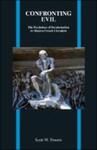
Confronting Evil: The Psychology of Secularization in Modern French Literature
Scott M. Powers
Confronting Evil: The Psychology of Secularization in Modern French Literature holds that the concept of evil is central to the psychology of secularism. Drawing on notions of secularization as a phenomenon of ambivalence or dualism in which religion continues to exist alongside secularity in exerting influence on modern French thought, author Scott M. Powers enlists psychoanalytic theory on mourning and sublimation, the philosophical concept of the sublime, Charles Taylor's theory of religious and secular "cross-pressures," and William James's psychology of conversion to account for the survival of religious themes in Baudelaire, Zola, Huysmans, and Céline. For Powers, Baudelaire's prose poems, Zola's experimental novels, and Huysmans's and Céline's early narratives attempt to account for evil by redefining the traditionally religious concept along secular lines. However, when unmitigated by the mechanisms of irony and sublimation, secular confrontation with the dark and seemingly absurd dimension of man leads modern writers such as Huysmans and Céline, paradoxically, to embrace a religious or quasi-religious understanding of good and evil. In the end, Powers finds that how authors cope with the reality of suffering and human wickedness has a direct bearing on the ability to sustain a secular vision.
-
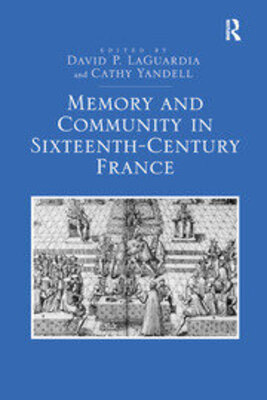
Ch. 2: “M'en souvenant, je m'oblie moymesmes”: Délie as Memento Mori
Brooke Di Lauro
This chapter appears in the book, Memory and Community in Sixteenth-Century France. Edited by David P. LaGuardia and Cathy Yandell.
Chapter abstract: The Book of Martyrs provides a glimpse into how religious violence is sublimated during the Wars of Religion in sixteenth-century France, but it also leads us to ask larger questions about sensory aggression more generally. In the texts emerging from the Wars of Religion, a crisis of the senses occurs and reoccurs, registering within what the author would term an emotive pass-through or conduit. This chapter analyzes some of the ways that the texts mobilize sensory perception but also proposes that sound and hearing have the most to tell us about the terrains of dispute and how these were experienced in the hostilities. The primacy of the visual among modes of sensory perception during the early modern period seems at first glance uncontestable, mostly due to the inertia of the Aristotelian heritage on the conceptualization of sight. The conflict between Catholics and Protestants can also play out as a war of sounds in a more literal sense.
-
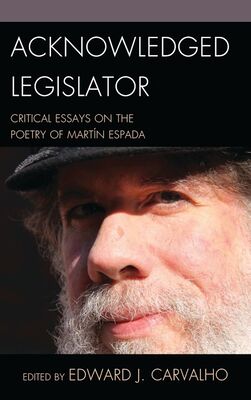
Ch. 9: From the Inner-City to the Cotton Fields: Living and Working Conditions in Martín Espada’s Poetry
Jeremy Larochelle
This chapter appear in the book, Acknowledged Legislator: Critical Essays on the Poetry of Martín Espada. Edited by Edward J. Carvalho.
Chapter abstract: On a night in September 2007, packed into the community space at Bus Boys and Poets in Northwest Washington, D.C., my poetry-doubting environmental literature students sat transfixed as poet and activist Martín Espada bellowed lines that blurred the borders between high art and activism. With tears in their eyes, and nodding with new found understanding, they were transported to inner-city tenements in Espada’s poetry, as they vividly pictured living and working conditions far from the comfort of their liberal arts college or their suburban neighborhoods. Poetry, they told me on the trip back to campus, is not just dead words on a page, but rather a relevant means of denouncing injustices to which they would not have otherwise been exposed first hand. Without knowing it, my students were essentially voicing the essence of Lawrence Buell’s definition of environmental literature and the sense of place that literary texts can so powerfully convey.
-
Chapter: All Tied Up: The Cravat and the Evolution of Men’s Fashion in Nineteenth-Century France
Leonard R. Koos
This chapter appears in the book, Fashion: Exploring Critical Issues. Edited by Barbara Brownie, Laura Pettican, and Johannes Reponen.
Chapter abstract: During the final years of the Bourbon Restoration in France in the 1820s, a surprising and inordinate number of guides and manuals appeared in print contending that the cravat was the most important element of men’s fashion. In ephemeral works like Cravatiana, (1823), L’Art de Mettre sa Cravate (1827), Le Code de la Cravate (1828), and Manuel de l’homme du Monde, Guide Complet de la Toilette et du Bon Ton (1828), among many others, the male reader was instructed on all aspects of the cravat - its history, the choice of an appropriate cravat according to the occasion, and illustrated directions on how to tie as many as forty-one types of cravats then current. This chapter will analyse these manuals and demonstrate how they are emblematic not only of this pivotal moment in men’s fashion, but also relate to greater social and cultural changes in nineteenth-century France. These texts will be contextualised by discussing their relationship to trends in men’s fashion in France in the first two decades of the century, specifically the transformation of the extravagant fashions of the Directory incroyables into the understated elegance of the fashionables of the 1820s, a French variant influenced by English dandy on the continent. This chapter will then analyse how these manuals discursively function as social commentary, discussing their conception the cravat as a mark of individuality in a society increasingly dominated by a lack of sartorial distinction. Finally, this chapter will demonstrate how the cravat during this period can ultimately be understood as an expression of class conflict and mobility as the emergent bourgeoisie attempted to imitate and distinguish itself from the Ancien Régime’s aristocracy in the use of this unique and increasingly marginalised accessory of nineteenth century men’s fashion.
-
Eve's Enlightenment: Women's Experience in Spain and Spanish America, 1726–1839
Catherine Marie Jaffe and Elizabeth Franklin Lewis
Eve's portrayal in the Bible as a sinner and a temptress seemed to represent -- and justify -- women's inferior position in society for much of history. During the Enlightenment, women challenged these traditional gender roles by joining the public sphere as writers, intellectuals, philanthropists, artists, and patrons of the arts. Some sought to reclaim Eve by recasting her as a positive symbol of women's abilities and intellectual curiosity. In Eve's Enlightenment, leading scholars in the fields of history, art history, literature, and psychology discuss how Enlightenment philosophies compared to women's actual experiences in Spain and Spanish America during the period.
Relying on newspaper accounts, poetry, polemic, paintings, and saints' lives, this diverse group of contributors discuss how evolving legal, social, and medical norms affected Hispanic women and how art and literature portrayed them. Contributors such as historians Mónica Bolufer Peruga and María Victoria López-Cordón Cortezo, art historian Janis A. Tomlinson, and literary critic Rebecca Haidt also examine the contributions these women's experiences make to a transatlantic understanding of the Enlightenment.
Printing is not supported at the primary Gallery Thumbnail page. Please first navigate to a specific Image before printing.