



-
NATO After Russia's Invasion of Ukraine: Threat Perceptions and Their Consequences
Jason W. Davidson
When Russia began its full-scale invasion of Ukraine in February 2022, analysts and policymakers highlighted the unifying shock that NATO members experienced. However even before the return of US president Donald Trump, beneath this seeming cohesion lay deep-seated differences in how member states perceive and prioritize security threats. NATO after Russia's Invasion of Ukraine analyzes the six most influential members of the alliance: the United States, the United Kingdom, France, Germany, Poland, and Italy. Through extensive interviews with current and former policymakers and a detailed examination of public statements and policies, Jason W. Davidson delivers a unique assessment of how divergent threat perceptions influence the NATO allies' major defense decisions, such as defense spending, and whether the alliance addresses each ally's most important threat and its view of NATO's most important challenges. With the rise in tumultuous geopolitical challenges posed by Russia, China, terrorism, mass refugee flows, and nationalism, this book provides the crucial context needed to navigate NATO's evolving role in international security.
-
Ch. 26: Ridicule in Late-Night Political Humor in the United States: Contours and Consequences
Stephen J. Farnsworth, S Robert Lichter, and Farah Latif
This chapter appears in the book, The Handbook of Social and Political Conflict. Edited by Sergei A. Samoilenko and Solon Simmons.
Chapter abstract: Late-night comedy has come to be a staple of political discourse in a polarized America; consequently, the increasing use of political humor offers ways to examine how ridicule relates to political conflict theory. Late-night humorists who once offered satire of American politics have now assumed the role of bona fide journalists, given the increasing number of young audiences that rely on receiving their news from late-night comedy. Lately, as the American political debate shifted from issue-based commentary to insult-oriented attacks, American politicians often seek to appear on late-night comedy shows for a chance that the late-night comedies will humanize their image and bolster their reputation in the eyes of American voters, despite the risk that the comics can potentially make the politicians look ridiculous . By examining how politicians, comedians, the mass media, and citizens use political humor to shape public orientations toward politicians and public policies, this chapter contributes to this increasingly important aspect of political conflict theory.
-

Late-Night in Washington: Political Humor and the American Presidency
Stephen J. Farnsworth, S Robert Lichter, and Farah Latif
This book traces the trajectory of late-night political humor, which has long been a staple of entertainment television and is now a prominent part of social media political discourse, especially when it comes to the presidency. From Richard Nixon on Laugh-In to Donald Trump’s avatar on Saturday Night Live, this book takes the next step and considers how late-night comedy treats Joe Biden, the new American president who strives to restore a civil public tone but offers far less comedy fodder than his predecessor. Employing content analysis, public opinion surveys, and a variety of other quantitative and qualitative research, the authors look beyond the day-to-day memes and mimes of late-night comics and show how political humor may evolve. For students and scholars of politics and the media, this book will appeal to the general public and political pundits as well.
-
Ch. 26: The Political Economy of Macroeconomic Policy in India
Surupa Gupta
This chapter appears in the book, The Oxford Handbook of Indian Politics. Edited by Sumit Ganguly and Eswaran Sriharan.
Chapter abstract: India’s macroeconomic policy has largely been driven by the need to create a stable environment for economic development and poverty reduction. In the immediate period after Independence, the concern for economic development led to policies that gave the government a central role in investment and production. By the 1970s, trade policy grew more protectionist trade policies and policies governing domestic and foreign investors more restrictive. A gradual reversal began after 1980 and in 1991, the Indian government undertook comprehensive liberalization of trade, investment and exchange rate policies, opening up most sectors to both domestic and foreign private investment. These new policies set the GDP growth rate on a higher path after 1980, reducing poverty on the one hand and increasing inequality on the other. This chapter shows that the executive enjoyed substantial autonomy in policymaking during the first 3 decades after Independence and embraced fiscal conservatism. However, the rise of diverse sectoral interests has led to a decline in autonomy. Policy-making during the more recent decades is marked by societal and sectoral demands, resulting in sharp increases in fiscal deficits. Higher levels of economic growth have allowed politicians the option of avoiding difficult reform decisions required to tame those deficits. At the same time, achieving higher growth rates in the future—a pre-requisite for continued economic development—will require sectoral reforms thus far thwarted by domestic politics. Overall, preferences of domestic businesses and large farm owners continue to shape most policies.
-

Feeling Their Pain: Why Voters Want Leaders Who Care
Jared McDonald
The 2020 presidential election in the United States marked, for many, a return to “compassionate politics.” Joe Biden had run on a platform of empathy, emphasizing his personal history as a means of connecting with everyone from American workers who had lost jobs to military families who had lost loved ones. Although perceptions of candidate compassion are broadly understood to influence voter choice, less understood is the question of how candidates convince voters they truly “care about people like them.” In Feeling Their Pain: Why Voters Want Leaders Who Care, Jared McDonald provides a framework for understanding why voters view some politicians as more compassionate than others. McDonald shows that perceptions of compassion in candidates for public office are based on the number and intensity of commonalities that bind citizens to political leaders. Commonalities can come in many forms, such as a shared experience (“I’ve been through what you’ve been through”), a shared emotion (“I feel the way you feel”), or a shared identity (“I am who you are”). Compassion is conceptualized through the lens of self-interest. Compassion may be universal, such as when candidates convey empathy to all individuals who are struggling. Or compassion may be exclusionary, such as when candidates express a preference for some groups over others. Thus, the way campaigns choose to wield compassion in their messaging strategies has important implications not only for election outcomes but also for American political polarization as well.
-

Sell-Outs or Warriors for Change?: A Comparative Look at Conservative Women in Politics in Democracies
Malliga Och, Shauna Shames, and Rosalyn Cooperman
This book addresses the central question of how right-wing women navigate the cross-pressures between gender identity and political ideology.
The hope has always been that more women in politics would lead to greater inclusion of women’s voices and interests in decision-making and policy. Yet this is not always the case; some prominent conservative women such as Margaret Thatcher have rejected the feminist label while others such as Angela Merkel have reluctantly accepted it. Republican women in the U.S. Congress have embraced social and economic policies contrary to what many consider to be women’s issues while EU Commission president Ursula von der Leyen is a staunch supporter of feminist ideas. Other conservative women, such as Marine LePen in France strategically use feminist ideas to justify their conservative stances on immigration. This brings up an interesting yet understudied question: under what circumstances do conservative women become feminist allies and when do they toe the party line? It is this tension between women’s political representation and conservatism that this edited volume explores.
-
Ch. 10: Wasted Opportunity: COVID-19 and Regional Cooperation in South Asia
Surupa Gupta
This chapter appears in the book, The Covid-19 Crisis in South Asia: Coping with the Pandemic. Edited by Sumit Ganguly and Dinsha Mistree.
Chapter abstract: This chapter seeks to assess the impact of the pandemic on cooperation within the region. It focuses on the region known as South Asia, consisting of the following countries: Afghanistan, Bangladesh, Bhutan, India, Maldives, Nepal, Pakistan, and Sri Lanka. The chapter focuses on two aspects of regional cooperation: economic integration among the countries of the region and cooperation on addressing the impact of the Covid-19 pandemic. It provides a brief history of regional cooperation efforts in South Asia. The chapter highlights the role China played in the region during the pandemic. It argues that the pandemic drove home the fragility of growth and the challenges facing economic cooperation in the region. The chapter highlights the challenges and opportunities associated with regional cooperation in South Asia in general and how these have manifested themselves in the context of the Covid-19 pandemic in particular.
-
Ch. 34: Regional Trade and Investment in South Asia
Surupa Gupta
The chapter appears in the book, Routledge Handbook of the International Relations of South Asia. Edited by Sumit Ganguly and Frank O'Donnell.
Chapter abstract: Countries in South Asia have made substantial progress in liberalizing trade and investment. While most adopted inward-looking policies from the 1950s through the early 1970s, the countries in the region began to pivot to liberal trade and economic policies from the late 1970s. The change was prompted by low growth rates, low levels of development, and subsequent economic crises in each country. The content of the new policies was consistent with neoliberal policies that international organizations such as the International Monetary Fund and the World Bank prescribed to countries facing economic crises. The resultant liberalization raised trade volumes, per capita incomes, and economic growth rate in all countries in the region. However, regional integration levels remain low, and poverty remains a challenge for the region. The COVID-19 pandemic has brought the fragility of economic growth into sharp focus and has indicated the need for further reforms and for enhanced efforts toward regional economic integration.
-
Equipping Educators to Teach Religious Literacy: Lessons from a Teacher Education Program in the American South
Emile Lester and W.Y. Alice Chan
This volume provides a detailed evaluation of a unique education program implemented in secondary schools in Georgia to enhance teachers’ religious literacy and their ability to promote this in schools and classrooms. The text demonstrates that religious literacy can be proactively taught to students, whilst also highlighting key considerations and tensions around religious liberty in the American South. Spanning rural, urban, and suburban Georgia, the text presents an original approach to the growing field of religious literacy by foregrounding community voices and perspectives. Using rich empirical data and qualitative interviews with religious and political leaders, scholars, teachers, parents, and students, the book evaluates the challenges, efficacy, and benefits of the program in view of rising political polarization. In doing so, the text tackles historical and contemporary issues around race and religion, and considers tensions between religious and nonreligious groups in the US. Ultimately, the book presents a significant contribution to the dialogue around fostering religious literacy in schools. This text will benefit researchers, academics, and educators with an interest in religious education, teacher education, and religious literacy more broadly. Those interested in the sociology of education, as well as diversity and religion in America, will also benefit from this volume.
-
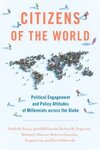
Citizens of the World: Political Engagement and Policy Attitudes of Millennials across the Globe
Stella M. Rouse, Jared McDonald, Richard N. Engstrom, Michael J. Hanmer, Roberto Gonzalez, Siugmin Lay, and Daniel Miranda
The Millennial Generation, the age cohort born between the early 1980s and the late 1990s, is the most educated, digitally connected, and globalized in the history of the world. Around the globe, Millennials encompass 1.8 billion people, a quarter of the population. The size of the Millennial Generation means that they will soon produce a majority of political, economic, and social leaders. It is therefore important to understand how the Millennial Generation may respond in an era of rapid change and uncertainty, shaped by factors such as a global pandemic, economic hardship, demands for racial justice, and the retrenchment of the United States from the global stage. Making sense of what is to come requires a deeper understanding of what defines the Millennial Generation’s persona, their attachment to various identities, how they perceive the need for change, and the tools they will utilize to bring about change. Citizens of the World explores the political attitudes and behaviors of Millennials relative to older adults across eight countries: Australia, Chile, Mexico, New Zealand, South Africa, South Korea, the United Kingdom, and the United States. The book argues that Millennials share a core persona, one that differentiates between a traditional and an emerging global identity that shapes news consumption, political attitudes, civic engagement, public service, and beliefs about the ability to enact political change. In this first-of-its-kind comparative analysis, the authors find that Millennials are unique in a variety of ways that have important implications for domestic and international politics.
-
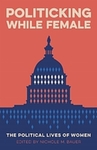
Part II: On the Money: Assessing the Campaign Finance Networks of Women Congressional Candidates
Rosalyn Cooperman
This chapter appears in the book, Politicking While Female: The Political Lives of Women. Edited by Nichole M. Bauer and Robert Mann.
Chapter abstract: Cooperman examines how women running for U.S. Congress build, access, and mobilize campaign finance networks, and how those networks differ from those of male candidates. The chapter is situated within the broader scholarly question of whether fundraising disadvantages for women stem from fewer resources, different donor relationships, or structural features of party and interest‑group networks.
-
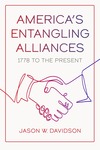
America's Entangling Alliances: 1778 to the Present
Jason W. Davidson
Since the Revolutionary War, the United States has entered into dozens of alliances with international powers to protect its assets and advance its security interests. America’s Entangling Alliances offers a corrective to long-held assumptions about US foreign policy and is relevant to current public and academic debates about the costs and benefits of America’s allies. Author Jason W. Davidson examines these alliances to shed light on their nature and what they reveal about the evolution of American power. He challenges the belief that the nation resists international alliances, showing that this has been true in practice only when using a narrow definition of alliance.
-
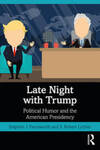
Late Night with Trump: Political Humor and the American Presidency
Stephen J. Farnsworth and S Robert Lichter
Political humor has been a staple of late-night television for decades. The Trump White House, however, has received significantly greater attention than that of past presidents, such as Barack Obama, George W. Bush, and even Bill Clinton. In response to Trump’s strident politics, late-night comics, including Stephen Colbert, Jimmy Kimmel, Trevor Noah and Jimmy Fallon, have sounded key policy notes, further blurring the boundary between news and satire. Weekly humorists, including John Oliver and Samantha Bee, extend the critique with in-depth probing of key issues, while Saturday Night Live continues to tap the progression from outrage to outrageousness.
Using unique content analysis techniques and qualitative discussions of political humor, Farnsworth and Lichter show how late-night political humor, and these seven programs in particular, have responded to the Trump presidency. Employing a dataset of more than 100,000 late night jokes going back decades, these noted media scholars discuss how the treatment of Trump differs from previous presidents, and how the Trump era is likely to shape the future of political humor. The authors also employ public opinion survey data to consider the growing role these late-night programs play in framing public opinion and priorities. This book will interest scholars, the curious public, and students of politics, communications and the media, and contemporary American culture.
-
Politics and Society in Contemporary China
Elizabeth Freund Larus
This acclaimed introduction to China's politics and policies has been extensively revised and thoroughly updated not only to focus on the Xi Jinping era, but also to be even more accessible to students. Elizabeth Larus concisely captures the dynamism of Chinese politics. From local politics to the judicial system, from minority issues to defense policy, from the Belt and Road Initiative to global political and economic statecraft, she provides a rich, thought-provoking analysis of the forces and facets of political, social, and economic change.
-
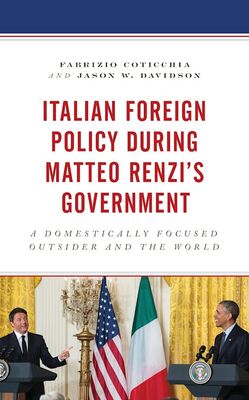
Italian Foreign Policy during Matteo Renzi's Government: A Domestically Focused Outsider and the World
Fabrizio Coticchia and Jason W. Davidson
This book sets out to explain the foreign policy of Italian Prime Minister Matteo Renzi (February 2014 to December 2016). It offers a unique analytical framework to make sense of Renzi’s foreign policy: the domestically-focused outsider. It argues that to untangle Renzi’s foreign policy one must first understand that his clear priority was enacting domestic economic and political reforms. Domestic focus means that Renzi made foreign policy decisions with a sensitivity to public opinion and party unity. The book also argues that Renzi’s status as an outsider in Italian politics—having previously served only as the mayor of Florence—provides critical insight into his foreign policy. Renzi was prone to skepticism of the establishment and dramatic, symbolic gestures rather than patient coalition building. The book applies this framework to the five most important foreign policy issues Renzi’s government faced: migration, finance and the EU, Russia, ISIL, and Libya. The book’s analysis of the cases benefits from over twenty elite interviews, including those with senior members of Renzi’s government.
-

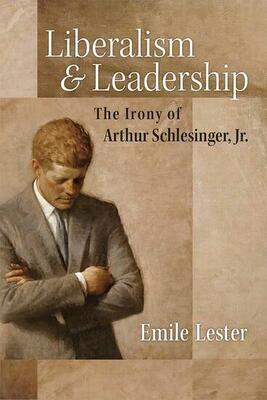
Liberalism and Leadership: The Irony of Arthur Schlesinger, Jr.
Emile Lester
Most scholars and pundits today view Franklin Delano Roosevelt and John F. Kennedy as aggressive liberal leaders, while viewing Schlesinger’s famous histories of their presidencies as celebrations of their steadfast progressive leadership. A more careful reading of Schlesinger’s work demonstrates that he preferred an ironic political outlook emphasizing the virtues of restraint, patience, and discipline. For Schlesinger, Roosevelt and Kennedy were liberal heroes and models as much because they respected the constraints on their power and ideals as because they tested traditional institutions and redefined the boundaries of presidential power. Aggressive liberalism involves the use of inspirational rhetoric and cunning political tactics to expand civil liberties and insure economic equality. Schlesinger’s emphasis on the crucial role that irony has played and should play in liberalism poses a challenge to the aggressive liberalism advocated by liberal activists, political thinkers, and pundits. That his counsel was grounded in conservative insights as well as liberal values makes it accessible to leaders across the political spectrum.
-
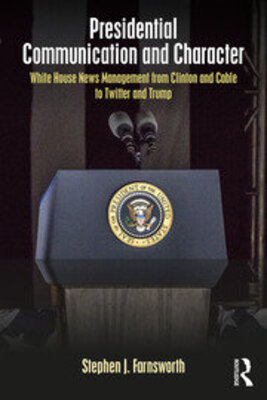
Presidential Communication and Character: White House News Management from Clinton and Cable to Twitter and Trump
Stephen J. Farnsworth
This book traces the evolution of White House news management during America’s changing media environment over the past two decades. Comparing and contrasting the communication strategies of Bill Clinton, George W. Bush, Barack Obama, and Donald Trump, it demonstrates the difficulty that all presidents have in controlling their messages despite a seemingly endless array of new media outlets and the great advantages of the office. That difficulty is compounded by new media’s amplification of presidential character traits for good or ill. Facebook, Twitter, and YouTube notwithstanding, presidential power still resides in the "power to persuade," and that task remains a steep challenge. More than ever, presidential character matters, and the media presidents now employ report on the messenger as much as the message.
-
Ch. 7: India and RCEP: Challenges and Opportunities of Opening Up the Farm/Food Sector
Surupa Gupta
This chapter appears in the book, Heading East: Security, Trade, and Environment between India and Southeast Asia. Edited by Karen Stoll Farrell and Sumit Ganguly.
Chapter abstract: The Regional Comprehensive Economic Partnership (RCEP), a sixteen country trade grouping slated to become the largest free trade area in the world, is emerging as one of India’s primary opportunities for increasing connectivity to East and Southeast Asia. Not only does this offer Indian producers access to a large Asian market but also the possibility of joining global value chains that would potentially increase trade with the rest of the world. Identifying India’s defensive and aggressive interests in agriculture and food processing, this chapter argues that Indian policymakers need to address domestic infrastructural deficits and policy reform bottlenecks if India is to fully exploit its opportunities from its trade connectivity with the east. They also need to re-examine the defensive interests, focus on export interests and place the conversation within the context of India’s overall interest in economic development and job creation.
-
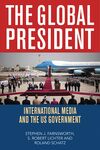
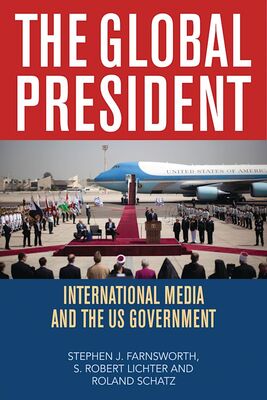
The Global President: International Media and the US Government
Stephen J. Farnsworth, S Robert Lichter, and Roland Schatz
In The Global President: International Communication and the US Government, scholars Stephen J. Farnsworth, S. Robert Lichter and Roland Schatz provide an expansive international examination of news coverage of US political communication, and the roles the US government and the Presidency play in an increasingly communicative and interconnected political world. This comprehensive yet concise text will engage and inform students in many intersecting disciplines, as it includes analyses of not just the Presidency, but US foreign policy and contemporary political media itself. The media developed to keep pace with the headwinds of political change are being asked more and more to adapt to and enhance the ways in which policy-makers, voters, and students make sense of the process of governance.
The realities of an ever-changing political landscape are magnified nowhere more greatly than in the realm of foreign policy, and the stakes surrounding the need for quality communicational skills are no higher than at 1600 Pennsylvania Avenue because - when the voices of the US government speak - the world is listening. This book provides students a perfect entry point into the complex and amorphous relationship between media and government, where that relationship has been, and where it looks to be heading in the future. -
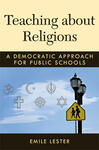
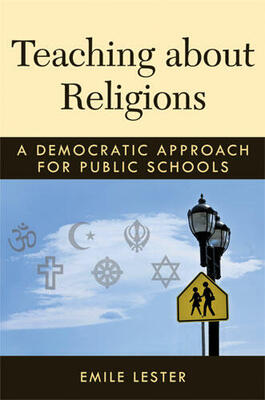
Teaching about Religions: A Democratic Approach for Public Schools
Emile Lester
Frequent news stories about the debates waged between secularists and religious conservatives have convinced most Americans that public schools must choose between promoting respect for religious minorities and respecting the interests of conservative Christians. As a result, public schools fail to teach students about the meaning and value of protecting religious liberty and consequently perpetuate mistrust across the cultural divide, further empower extremists, and obscure the fact that most Americans of all religious backgrounds share a commitment to basic democratic principles.
In response, the public schools in the religiously diverse and divided community of Modesto, California, have introduced a widely acclaimed required world religions course. Drawing on groundbreaking research on the creation of and response to the Modesto course as well as on political philosophy, Emile Lester advocates a civic approach to teaching about religion in public schools that at once emphasizes respect for all views about religion and provides a special recognition of conservative Christian beliefs.
Printing is not supported at the primary Gallery Thumbnail page. Please first navigate to a specific Image before printing.